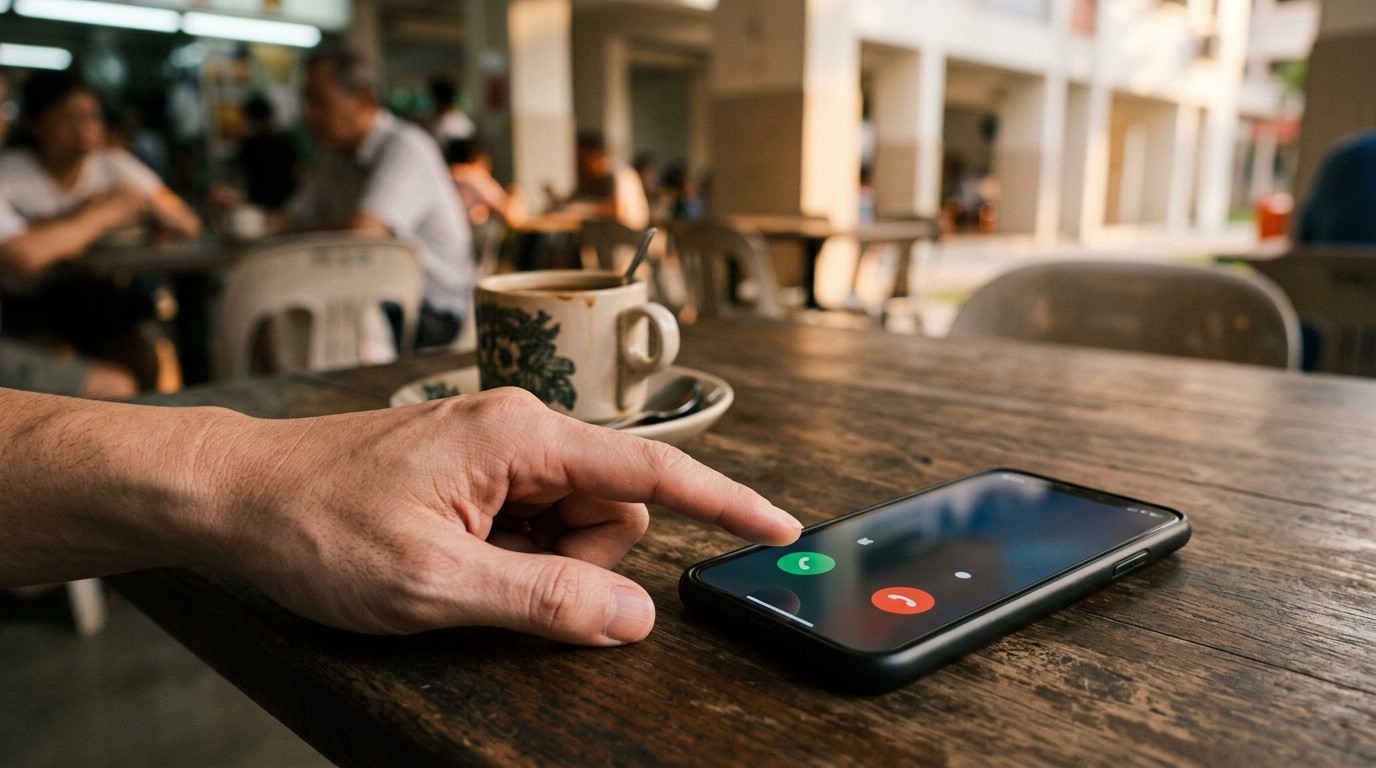
Your phone rings. A polite voice says they're calling from Harvey Norman: your new 75-inch TV is out for delivery this afternoon. You never bought a TV. The caller sounds surprised too, and offers to help. That offer is where the scam begins.
Many people have tagged numbers on WhoCalledSG with the same story. The opening line changes, but the script that follows is almost always the same. We call it the handover scam, because the caller's whole aim is to hand you on to someone more "official", again and again, until you move your money.
How the call starts
The first caller pretends to be from a company you'd expect to hear from. What people describe in their comments:
- A shop delivery you didn't order. "Harvey Norman" says a TV or fridge is on its way, or that the first instalment will be charged within the hour.
- Insurance you never bought. A caller from "Grab", "YouTrip" or "Shopee" says your insurance policy renews today and asks if you want to cancel it.
- A card payment you didn't make. "Your bank" asks whether you just made a payment, sometimes on a card you don't even have. Some callers already know your name or part of your NRIC, which makes the call feel real. Knowing these details proves nothing: they can come from data leaks or earlier scams.
- A phone line opened in your name. A "telco" says someone bought a phone or opened a line using your ID.
These companies have nothing to do with the calls. Scammers borrow well-known names because you're more likely to believe them.
The handover
When you say "That wasn't me", the caller agrees that something is wrong: your identity must have been stolen. They offer to transfer you to someone who can help.
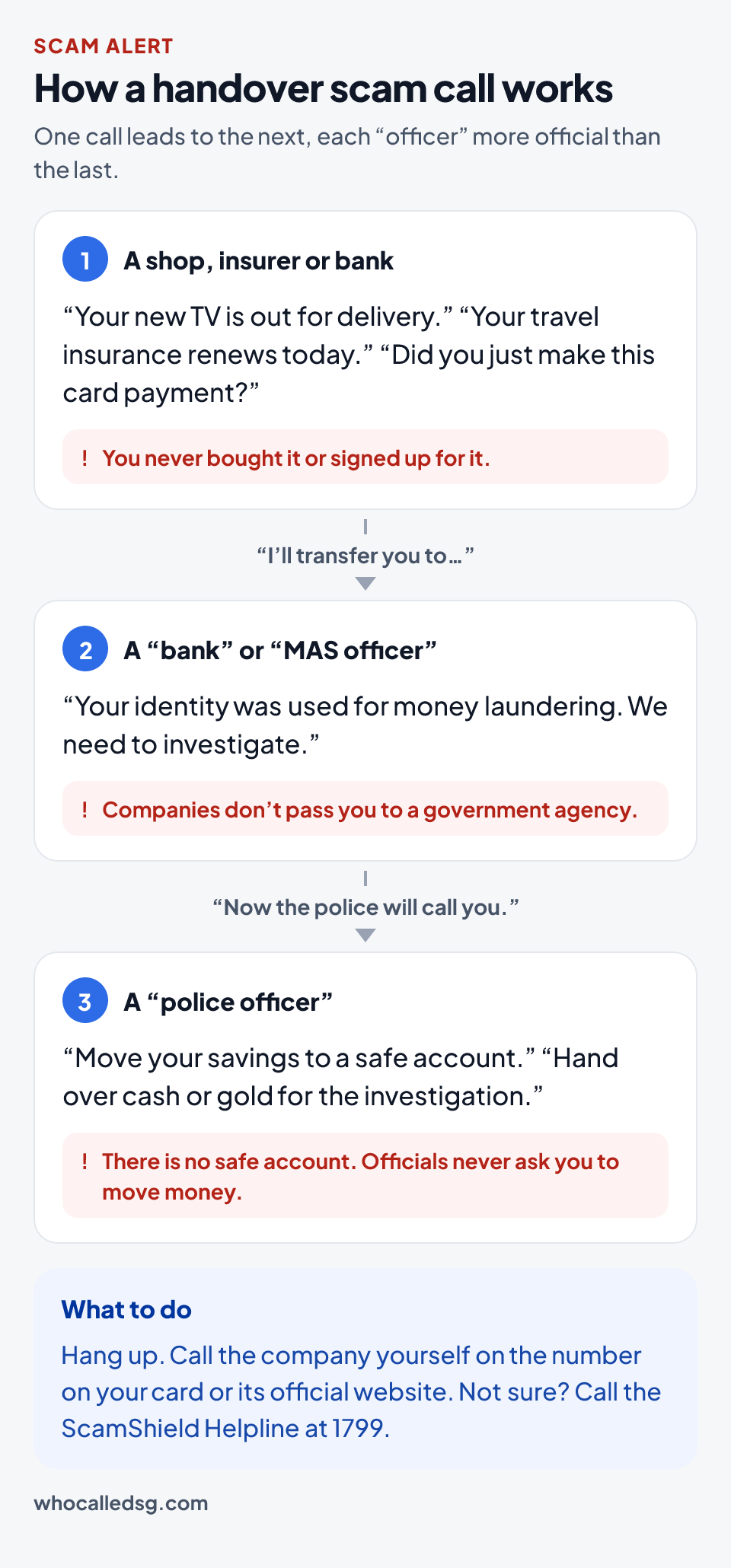
The second caller says they're from your bank, the police, or the Monetary Authority of Singapore (MAS). Now the story is serious: your identity was used for money laundering, and you are part of an investigation. They may send you a photo of an "officer card" or a "warrant", ask you to keep the call secret, and keep you on the phone for a long time.
The third step is always about money. To "protect" your savings during the investigation, you're asked to move them to a "safe account". In some cases, people are asked to withdraw cash, buy gold, or hand over jewellery and watches to someone sent to collect them.
On 21 September 2026, the Singapore Police Force warned that this exact pattern (a fake Harvey Norman call, then a fake MAS officer) had cost people at least $4.8 million in at least 119 cases since January (police advisory).
Advertisement
The giveaways
Any one of these is enough to hang up:
- You're told about something you never did. A purchase, a policy, a payment, a phone line. Real companies don't call to tell you about orders you didn't place and then offer to fix it on the spot.
- You're transferred from a company to a government officer. Shops, insurers and banks don't pass your call to MAS or the police. And government officials never transfer calls to each other.
- There's a "safe account". No such thing exists. Government officials will never ask you to transfer money, buy gold or hand over valuables, and never ask for your banking login details over the phone.
- You're asked to keep it secret or to stay on the line. Scammers want to stop you checking with anyone else.
- You're asked to install an app or click a link to "verify" yourself.
What to do
- Hang up. It isn't rude. A real company or officer will understand.
- Call back on a number you trust: the one printed on your card, on your policy, or on the company's official website. Never the number the caller gives you.
- Not sure? Call the ScamShield Helpline at 1799 (24 hours; +65 6869 1799 from overseas). They can tell you whether it's a scam and connect you to your bank.
- If you've already sent money or shared details, call your bank's 24-hour hotline straight away and ask them to freeze your accounts, then make a police report online.
- Warn the next person. Search the number on WhoCalledSG, tag it and leave a short comment about what the caller said. Please don't include anyone's personal details.
A new look for WhoCalledSG
You may have noticed the site looks different. We've rebuilt it to make checking a number faster and the results clearer:
- Every number has its own page that you can bookmark or share with family on WhatsApp.
- Clearer reports. Each number shows what most people tagged it as, how many people reported it and when the last report came in. Reports come from the community and aren't verified, so we say so.
- More tags, including Spam, Moneylender, Recruiter, Delivery and Telco, and a Helpful button on comments so the most useful ones rise to the top.
- Dark mode, for late-night checks.
- A report about your own number is wrong? Let us know through the Contact page and we'll review it.
Thank you to everyone who takes a moment to tag a number! Each report makes the next scam call a little less likely to work.