
In recent years, Singaporeans have seen a surge in spoofed calls, with scammers using the +65 prefix to trick victims into believing they are receiving a local call. These scams are not only annoying but can also lead to significant financial and personal losses. As fraudsters become more sophisticated in their tactics, it’s crucial for Singaporeans to stay informed and vigilant.
This post will explain how spoofed calls work, why they are a growing problem in Singapore, and what you can do to protect yourself from falling victim to these deceptive practices.
So What is Number Spoofing?
Number spoofing is a technique used by scammers to disguise their phone number as a different one, often making it appear as though it’s coming from a local source. In Singapore, this often involves using the +65 prefix, which is the country code for Singapore, in front of a seemingly local number.
By using number spoofing, scammers can bypass the initial skepticism people might have about receiving calls from unknown or international numbers. Since many Singaporeans are accustomed to seeing the +65 prefix for local calls, they are more likely to answer the phone, believing it’s a legitimate call from within the country.
These spoofed calls are often used to carry out various types of scams, including but not limited to:
- Phishing Scams: The caller pretends to be from a bank, government agency, or other trusted organization, asking for personal information or payment details.
- Tech Support Scams: The caller claims to be from a tech company, warning of a supposed issue with your device and offering to “fix” it for a fee.
- Investment Scams: The caller presents a fraudulent investment opportunity, promising high returns with little risk.
Why is This a Growing Problem in Singapore?
Singapore has seen a dramatic increase in spoofed calls in recent years, with many people reporting receiving multiple such calls in a single day.
The rise in spoofed calls can be attributed to several factors:
- Increased Reliance on Technology: As more people use smartphones for various aspects of their daily lives, scammers have more opportunities to exploit this reliance.
- Advanced Technology for Spoofing: Scammers have access to more advanced technologies that allow them to easily spoof numbers, making it harder for authorities to track them down.
- High Trust in Local Calls: Singaporeans generally trust local numbers, especially those with the +65 prefix, which these scammers exploit to their advantage.
The consequences of these scams can be severe, leading to financial losses, identity theft, and even emotional distress for the victims.
Real-Life Cases of Spoofed Call Scams in Singapore
To understand the impact of spoofed call scams, let’s look at some real-life cases that have occurred in Singapore. These examples illustrate how convincing these scams can be and the serious consequences for those who fall victim.
Case 1: The “Bank Verification” Scam
In this case, a Singaporean woman received a call from a +65 number, with the caller claiming to be from her bank’s fraud department. The caller informed her that there had been suspicious activity on her account and that they needed to verify her details to secure it. Trusting the local number, the woman provided her banking information, only to realize later that her account had been emptied by the scammers.
The Singapore Police Force later issued a warning about this type of scam, advising the public to be cautious of unsolicited calls asking for personal information, even if they appear to be from a local number.
Case 2: The “Government Agency” Scam
Another victim received a call from a +65 number, with the caller claiming to be from a government agency. The caller informed the victim that they were under investigation for tax evasion and needed to make an immediate payment to avoid legal action. The victim, fearing legal trouble, followed the instructions and transferred a large sum of money to the scammers.
This scam was particularly convincing because it played on the victim’s fear of legal consequences and the trustworthiness of government agencies. The Singapore Police Force and the Inland Revenue Authority of Singapore (IRAS) have both issued warnings about this type of scam.
Government Efforts to Combat Number Spoofing
 (image source: CNA Singapore)
In response to the rise in spoofed calls with the "+65" prefix, Singapore's government and telcos have implemented measures to protect the public. Since April 2020, telcos have been required to add a "+" prefix for all international calls, helping to identify potentially fraudulent numbers. However, scammers quickly adapted, using the "+65" prefix to mimic local calls.
To combat this, the Infocomm Media Development Authority (IMDA) and telcos have worked together to block suspicious calls, currently preventing around 15 million scam calls each month. With new analytics and technologies, they aim to increase this to 55 million blocked calls monthly.
IMDA has also enhanced "in-network capabilities" to prevent scam messages and spoofed calls, including those mimicking local agencies. The public is advised to avoid answering "+65" calls unless expecting an international call, as these often turn out to be scams.
Advertisement
How to Spot a Spoofed Call
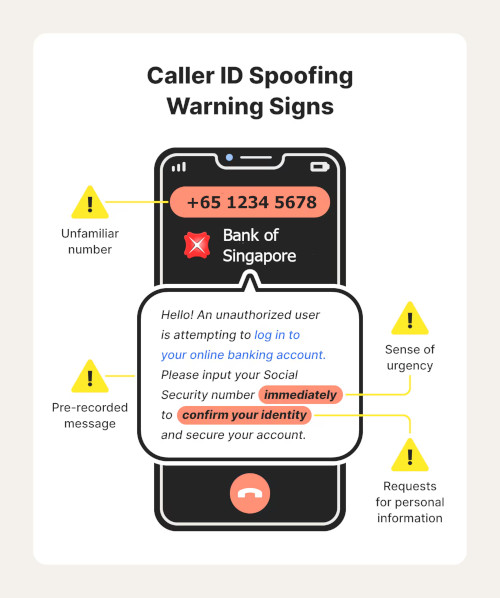
While spoofed calls can be convincing, there are several ways to spot them and protect yourself:
1. Check the Caller ID Carefully
While a +65 prefix may indicate a local call, it’s important to remember that scammers can easily manipulate caller IDs. If the number looks unusual or if you weren’t expecting a call from that number, proceed with caution.
2. Listen for Unusual Behavior
Spoofed call scammers often try to create a sense of urgency or fear to prompt you into action. If the caller is pressuring you to provide personal information, make a payment, or take immediate action, it’s a red flag. Legitimate organizations won’t rush you or demand sensitive information over the phone.
3. Verify the Caller’s Identity
If you receive a call from someone claiming to be from a bank, government agency, or other organization, ask for their name and department, then hang up and call the organization directly using a verified phone number. This ensures you’re speaking to the real organization and not a scammer.
4. Be Wary of Unsolicited Calls
If you weren’t expecting a call, be extra cautious. Scammers often target people randomly, hoping to catch someone off guard. If the call seems out of the blue, take a step back and assess the situation before providing any information.
5. Don’t Rely Solely on Caller ID
Remember that caller ID alone is not a reliable indicator of a call’s legitimacy. Even if a number appears to be local, it could still be a spoofed call. Always verify the caller’s identity through other means.
6. Identify the Unknown Number
You can also use legitimate sites like WhoCalledSG to try and identify if this particular unknown number has been reported and tagged as a suspicious number by another person before.
What to Do If You Receive a Spoofed Call
If you suspect you’ve received a spoofed call, there are several steps you can take to protect yourself and report the scam:
1. Don’t Engage
If you suspect a call is a spoof, don’t engage with the caller. Simply hang up. Avoid providing any personal information or responding to their requests.
2. Block the Number
Most smartphones have the option to block a number. While scammers can easily switch to a new number, blocking the number can prevent future calls from the same source.
3. Report the Call
Report the spoofed call to the Singapore Police Force or ScamShield. Providing details about the call can help authorities track down scammers and prevent others from falling victim.
4. Warn Others
If you receive a spoofed call, warn your friends, family, and colleagues. Sharing your experience can help others recognize similar scams and avoid becoming victims.
Conclusion
Spoofed calls with the +65 prefix are a growing problem in Singapore, but by staying vigilant and informed, you can protect yourself from these deceptive scams. Remember, the key to avoiding spoofed call scams is to be cautious, skeptical, and proactive in verifying the identity of any caller who contacts you out of the blue.
Thank you for reading, and stay safe!